
Key Takeaways
- Aerospace wire alloy selection directly impacts safety, reliability, and performance
- High-temperature environments often require nickel-based alloys like Inconel® and HAYNES®
- Corrosion resistance is critical in harsh aerospace operating conditions
- Mechanical strength and fatigue resistance influence long-term durability
- Material traceability and certification are essential for aerospace compliance
- The right aerospace wire supplier helps ensure performance and consistency
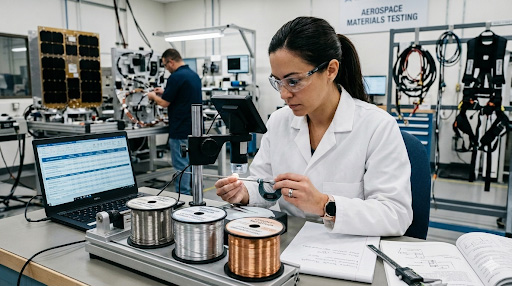 Not all aerospace wire is created equal. In aerospace applications, wire materials must perform under some of the harshest conditions imaginable, including extreme temperatures, vibration, corrosive environments, and demanding mechanical loads. Selecting the right alloy is not simply a materials decision, it is a performance and reliability decision.
Whether the application involves turbine systems, instrumentation, thermal shielding, electrical systems, or mechanical linkages, choosing the correct aerospace-grade wire material can significantly affect product lifespan and system performance.
Why Alloy Selection Matters for Aerospace Wire
Aerospace wire often operates in environments where conventional materials fail. Engineers must balance multiple factors when selecting a wire alloy.
Important considerations include:
- Operating temperature range
- Oxidation and corrosion resistance
- Strength at elevated temperatures
- Fatigue and creep resistance
- Electrical or thermal conductivity requirements
- Weight constraints
- Regulatory and material certification requirements
A wire alloy that performs well at room temperature may lose strength, become brittle, or oxidize rapidly at elevated temperatures. This is why specialized high-temperature alloy wire is commonly used in aerospace systems.
Inconel® Wire for High-Temperature Aerospace Applications
Inconel alloys are among the most widely specified materials for aerospace wire applications involving extreme heat.
Inconel is a nickel-chromium-based superalloy engineered for excellent oxidation resistance and strength at elevated temperatures. These alloys are commonly used in jet engines, turbine seals, exhaust systems, and thermal shielding applications.
Benefits of Inconel wire include:
- Excellent high-temperature strength
- Strong oxidation resistance
- Good fatigue resistance under thermal cycling
- Reliable performance in extreme pressure environments
Common aerospace uses include:
- Turbine engine components
- Wire seals
- Heat shields
- High-temperature fastening systems
When the application involves continuous exposure to elevated heat, Inconel wire is often one of the first materials engineers evaluate.
Hastelloy® Wire for Corrosive Aerospace Environments
Hastelloy alloys are particularly valuable when corrosion resistance is the top priority.
These nickel-based alloys are known for exceptional resistance to aggressive chemicals, oxidation, and corrosive atmospheres. While often associated with chemical processing, Hastelloy wire also serves critical aerospace applications exposed to corrosive combustion byproducts or challenging atmospheric conditions.
Advantages of Hastelloy wire include:
- Superior corrosion resistance
- Excellent chemical stability
- Strong resistance to pitting and cracking
- Good high-temperature performance
Applications may include:
- Fuel system components
- Exhaust assemblies
- Corrosion-prone sensor systems
- Specialized aerospace instrumentation
Hastelloy is especially useful when both heat and chemical exposure must be managed simultaneously.
HAYNES® Alloy Wire for Extreme Heat and Oxidation Resistance
HAYNES alloys are engineered for some of the most demanding high-temperature aerospace applications.
HAYNES alloys are designed to maintain mechanical integrity in environments involving sustained heat, oxidation, and thermal fatigue. These materials are frequently specified in gas turbine and propulsion systems.
Key benefits include:
- Exceptional oxidation resistance
- Strong creep resistance
- Stability during prolonged heat exposure
- Reliable mechanical properties at extreme temperatures
These alloys are commonly selected for:
- Combustion systems
- Propulsion assemblies
- Turbine sealing applications
- Aerospace thermal management systems
When long-term thermal stability matters, HAYNES alloy wire can provide a critical performance advantage.
Stainless Steel Wire for Aerospace Applications
Stainless steel remains an important aerospace wire material because it offers a strong balance of cost, corrosion resistance, and mechanical performance.
Common aerospace grades include 302, 304, 316, and 17-7 stainless steel.
Stainless steel wire offers:
- Good corrosion resistance
- Strong mechanical strength
- Excellent formability
- Cost efficiency versus exotic alloys
Typical uses include:
- Springs
- Safety wire
- Fastening systems
- General structural support
- Wire mesh and filtration
Although stainless steel cannot match nickel superalloys at extreme temperatures, it remains a practical choice for many aerospace wire applications.
Nickel Alloy Wire for Specialized Aerospace Performance
Nickel alloy wire serves a broad range of aerospace applications requiring specialized combinations of heat resistance, strength, and corrosion protection.
Depending on the alloy composition, nickel alloys can offer:
- High tensile strength
- Thermal stability
- Oxidation resistance
- Controlled expansion properties
- Excellent fatigue performance
These characteristics make nickel alloy wire highly valuable in precision aerospace systems where failure is not an option.
How to Choose the Right Aerospace Wire Supplier
Choosing the right alloy is only part of the decision. Aerospace buyers must also evaluate supplier capabilities.
Key supplier qualifications include:
- AS9100-certified quality systems
- Full material traceability
- Tight tolerance wire drawing capabilities
- Consistent lot-to-lot quality
- Support for custom alloys and specifications
In aerospace wire manufacturing, precision matters at every step, from raw material selection to final inspection.
Ken-tron manufactures precision drawn wire for demanding aerospace applications, including Inconel, Hastelloy, HAYNES alloys, stainless steels, and other nickel alloy wire materials. With advanced wire drawing capabilities and aerospace-focused quality systems, Ken-tron supports customers who require tight tolerances, material traceability, and consistent performance.
If you need help selecting the right alloy for your aerospace wire application, contact Ken-tron to discuss your specifications and performance requirements.